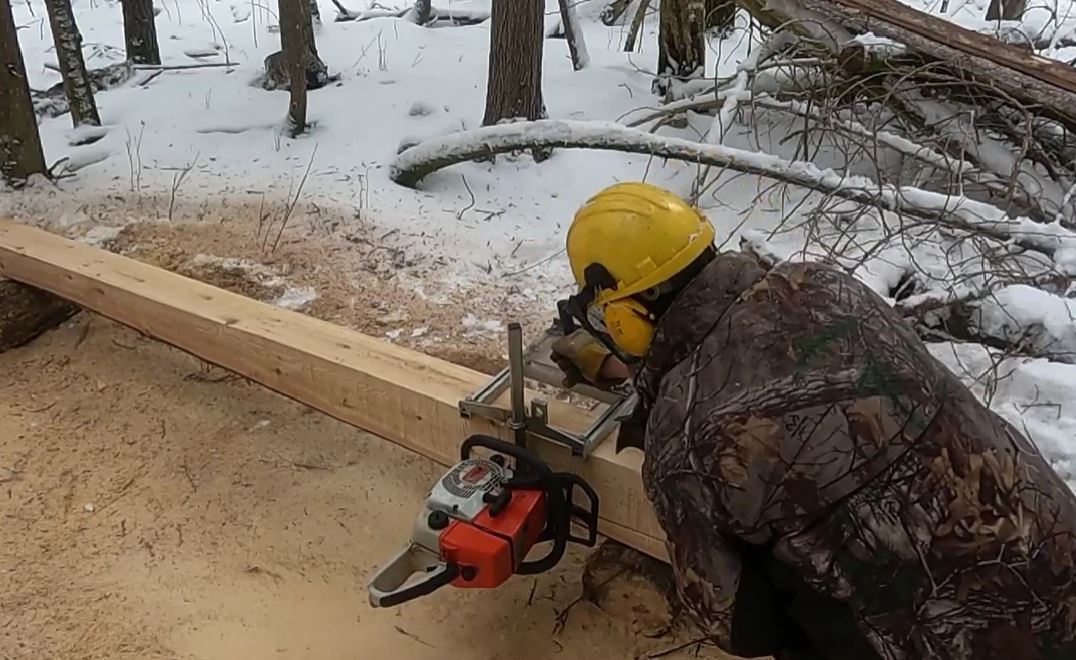
I need a 6"x6" beam for a project. I have big enough trees on the property. Using my Granberg chainsaw mill I can make this timber within a few hours. Here's how I did it in a simple step by step process.
While walking at the back of my property, I spotted a straight, tall cedar tree. I immediately had the thought: that would make the perfect beam. Cedar is prized for its natural rot resistance, workability, and strength-to-weight ratio—making it ideal for posts and beams like a 6x6. The challenge isn’t just cutting it down—it’s getting that log out of the woods without heavy equipment. That’s where a chainsaw mill and a 4-wheeler (ATV) can really shine.
Here’s a practical, no-nonsense approach to doing it safely and efficiently.
1. Choosing the Right Tree
Not every cedar will do. For a true 6x6 beam (which finishes at 5.5" x 5.5"), you’ll want a log with at least a 10–12 inch diameter at the small end. This gives you enough material to mill square while accounting for taper and waste.
Look for:
- A straight trunk with minimal twist
- Few large knots
- Healthy wood (no rot or hollow sections)
- Accessible location (this matters more than you think)
Also consider the path out. A perfect tree deep in swampy ground might not be worth the effort.
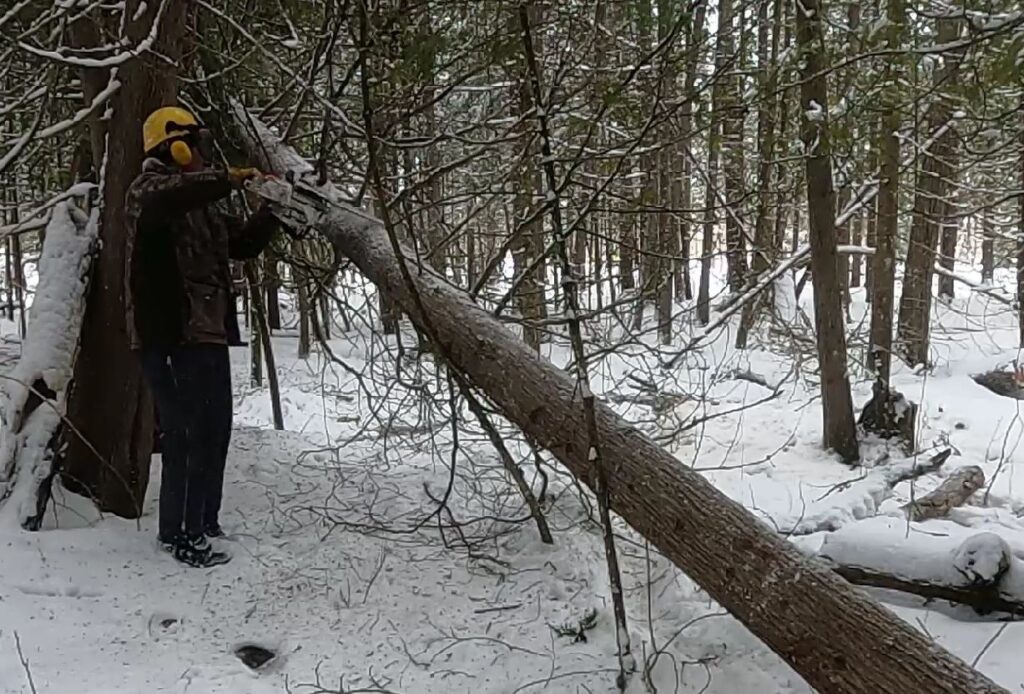
- This Tree is Perfect
2. Planning Your Route
Before you even start your chainsaw, map your extraction path. This step saves hours of frustration later.
Walk the route from tree to your trail or staging area:
- Clear small brush and deadfall
- Identify tight turns or obstacles
- Avoid steep side slopes if possible
- Pack down soft ground if needed
If your ATV struggles for traction, you’ll feel it immediately once that log is behind you.
3. Felling and Bucking
When you’re ready to drop the tree, follow proper chainsaw safety practices—helmet, chaps, gloves, and awareness of your surroundings.
Aim to fell the tree in the direction of your planned extraction route. This reduces the amount of repositioning needed later.
Once down:
- Limb the trunk cleanly
- Cut (buck) the log slightly longer than your final beam length
- Trim the butt end flat to make dragging easier
A clean, straight log slides much better than one with branch stubs sticking out everywhere.
4. Setting Up for the Pull
Dragging a raw log directly can work, but it’s tough on your ATV and the ground. A few simple tools make a huge difference:
- Logging chain or heavy-duty tow strap
- Choker chain setup (tightens around the log as you pull)
- Log arch or skidding cone (optional but excellent)
If you can, lift the front end of the log slightly using a log arch or even by rigging it higher on your hitch. This reduces friction and prevents the log from digging into the dirt. I didn't have this option available.
Without specialized gear, you can still improve things by:
- Attaching the chain about 1–2 feet from the front end
- Keeping the pull angle slightly upward
- Using steady, slow throttle instead of jerky acceleration

5. Using Your 4-Wheeler Effectively
Your ATV is powerful, but it’s not a skidder—so work with its limits.
Tips for a smooth haul:
- Use low gear for better torque and control
- Keep your speed slow and consistent
- Avoid sudden turns that could roll the log or stress the hitch
- If the log gets stuck, stop and reposition—don’t just gun it
Traction is everything. If your wheels start spinning, you’re just digging holes. In tough spots, consider:
- Adding weight over the rear tires
- Using tire chains in muddy or snowy conditions
- Laying down small logs (“corduroy”) over soft patches
6. Navigating Obstacles
Even with a good plan, you’ll hit snags—literally.
For rocks, stumps, or tight gaps:
- Stop and assess instead of forcing it
- Use a cant hook or peavey to roll or pivot the log
- Re-angle your pull if needed
Sometimes a small adjustment saves a lot of strain on both you and the machine.
7. Final Staging and Milling Prep
Once you’ve dragged the log to your staging area:
- Cut it to exact length if needed
- Seal the ends (with wax or paint) to prevent splitting
- Elevate it off the ground to keep it dry. I use cut logs with notches to make a workbench.
From here, it is ready for you to use a portable sawmill so you can mill it yourself if you’ve got the setup.
Click the link here to get the chainsaw mill setup: https://amzn.to/3QJycDc

In Conclusion:
Pulling a cedar log out of the backwoods with a 4-wheeler isn’t about brute force—it’s about planning, technique, and patience. A good route, proper rigging, and steady pulling will outperform raw horsepower every time.
And there’s something deeply satisfying about turning a tree from your own land into a solid 6x6 beam. It’s hard work—but it’s the kind that pays off every time you look at the finished structure.
CLICK HERE FOR PART 1 on YOUTUBE!
STAY TUNED FOR PART 2 SO YOU CAN SEE HOW I MILL THIS TO THE FINAL PRODUCT!