
Don't Wait Any longer, Start Sawmilling Today
What is sawmilling? It's really quite simple. It is the process of converting logs into lumber. If You have access to logs or know of a way to get logs then you can make any size lumber. Use this lumber for numerous possibilities such as woodworking, building, and DIY projects. The options are endless. There is a great satisfaction of turning raw timber (logs) into usable boards. The creative freedom it offers, sawmilling provides a unique and rewarding experience. If you ever thought is this something that I could do or would really enjoy then try it for your self. Here are some tips and tricks that can put you on the right track of owning your own sawmill and why it appeals to myself and others.
First a Brief Lesson in Sawmilling
Sawmilling as mentioned previously involves taking logs and cutting them into various dimensional sizes of lumber. In the olden days the rudimentary sawmills operated by selecting a suitable log, which is then fed into a saw blade. These style of mills still exist today with a modern spin of course. Todays sawmills come in various forms, from portable bandsaw mills to stationary circular sawmills. They all have their advantages and limitations which are based on factors such as size of the operation, size of lumber desired, and most importantly, budget.
Lets look at the types of sawmills
Portable: Portable sawmills are exactly that. A mill that can be moved so you are flexible and mobile. This allows you to mill lumber directly on-site, which is particularly useful for working in areas that are remote and difficult to access with equipment or cause some type of hardship to transport the logs to the mill. Portable sawmills come generally in 2 types.
The Chainsaw Mill and Portable Bandsaw
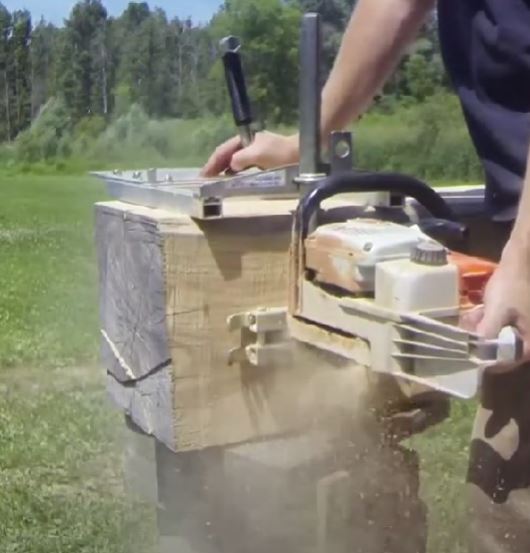
- Chainsaw Mill consists of a chainsaw as the main source of power which has an attachment on the bar and a specialized ripping chain. These are simple to carry in the field and are particularly well suited for remote milling.
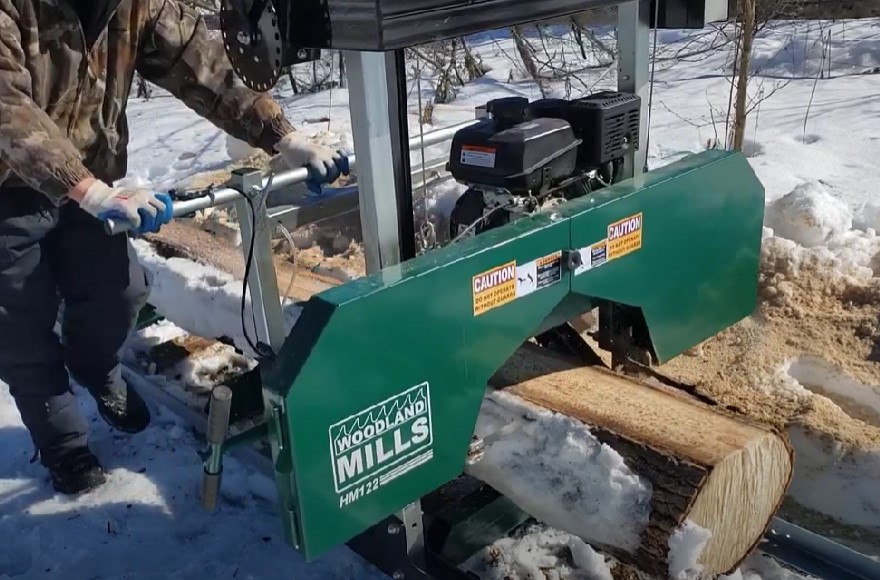
- Bandsaw Mills are a horizontal continuous saw blade with sharp teeth to slice through logs, producing smooth cuts and minimal waste. These are popular for their precision and minimal waste but come at a much higher price.
Stationary Mills: Stationary mills, on the other hand, are permanent structures that are generally larger operations and provide better efficiency when processing large quantities of wood. These generally employ a circular saw style for cutting.
Circular Saw Mills: These employ large, circular blades to cut logs into lumber. They are known for their speed and are often used in high-volume milling operations.
How I got started in Sawmilling
In 2005 I decided to start building a small off grid cabin on a remote property I own. I had a design in my mind and I knew exactly what the exterior would look like. This required some rustic shiplap style siding which I'd seen on numerous outbuildings in many of the Country's Parks from their early days. This seemed super fitting but I was going to need a lot of wood plank siding to make it work.

I conducted a forestry survey of the property and came up with a selective harvesting plan that would have me removing a few Eastern White Cedar sporadically from around the bush lot and milling them into siding. I could remove approx. 12 full grown cedar trees and mill them into planks. Cedar in it's natural state is very rot resistant and repels insects. Perfect for wood siding on the cabin. In order to do this though I needed some tools to make this happen. This meant a shopping spree was in order.
My First Mill
The first piece of equipment I bought was an Alaskan chainsaw mill made by Granberg. These attach to most chainsaws and provide a simple and portable method to mill trees into planks of any dimensions.
This required changing the chain out for a ripping chain. Ripping chain has a different profile to the teeth and is designed for cutting lengthwise on a tree vs the normal crosscut for making firewood etc.
I have used my chainsaw mill for many years now and will continue to do so for years to come. Here's some items I have used it for over the years.
Chainsaw Mill Project List
- Siding for my cabin
- Rustic benches for our wedding
- Log benches
- Siding for our chicken coop
- Thick planks for workbenches
- Stair stringer and steps
- Facia and soffit boards
- legs and top for a harvest table
My Upgrade to the Bigtime
Don't get me wrong, I love my chainsaw mill. It does a great job, its versatile and portable so you can take it to the tree versus bringing the tree to you, but I decided to upgrade eventually. I sold a piece of equipment I didn't need anymore and turned those funds into a portable bandsaw mill. I had always wanted one of these and finally picked one up. If you have the ability to set one of these up permanently and you can bring logs to it then I highly recommend getting one.
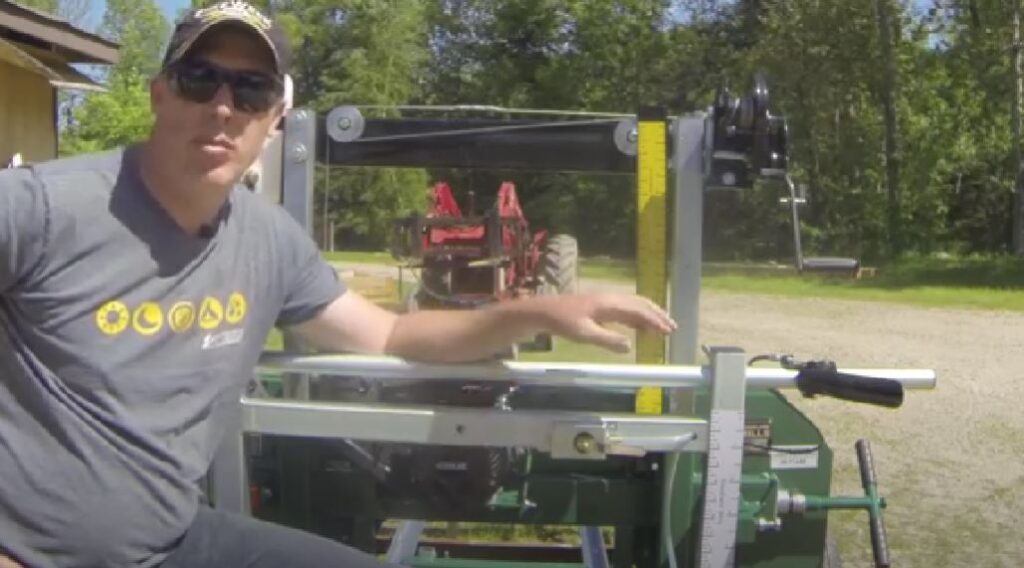
I did quite a bit a research and found the one that best suited me was made by a Canadian Company outside of Toronto in Ontario called Woodland Mills. I placed my order and it shipped out to me by transport in a crate. The next fun is that you have to assemble the mill. Some of it is preassembled but most you will have to put together. It's very simple and easy instructions made for an easy build.
Since I have received this mill I have used it for tons of milling. I have made beams, boards, slabs, cookies, bowl blanks, cutting boards etc. You name it. I love the ability to mill my own lumber. I have numerous acres of bush lot and there is always a project in the works that requires the mill. For example, my next project is to mill some 1800's barn beams for retrofitting into my own shop.
Heres How You Get Started with Sawmilling
If you’re new to sawmilling, here are a few key tips to get you going:
- Safety 1st: Sawmilling involves many potentially hazardous items from heavy machinery, sharp blades down to simple splinters. Wear protective gear (PPE), follow the equipment's safety guidelines, and ensure you are familiar and competent with the equipment .
- Learn the Basics: Familiarize yourself with the type of sawmills you are using and its operations. They come with instructional manuals and there are lots of videos to help on Youtube from yours truly so you can understand the use of the equipment.
- Ease Into It: Start with smaller logs and simple, easy projects to build your skills and confidence. As you gain experience, you can then advance to larger logs and more intricate projects.
- Maintenance: Regular maintenance is essential for keeping your sawmill in good working condition. This includes sharpening blades, checking alignment, and cleaning the equipment to prevent issues and ensure optimal performance.
- Reach Out: Talk to other sawyers and woodworkers. They can provide valuable insights and support. The company you purchased from will more than likely have a support group and are always super knowledgeable and ready to help.
Final Thoughts
Sawmilling is a rewarding past time that has endless possibilities to what you can create and accomplish. It offers the satisfaction of transforming raw timber into beautiful, functional lumber while providing the flexibility to customize and innovate. Whether it's the sustainability of the process, the cost savings, or the creative potential, owning a sawmill can be a fulfilling experience. The possibilities of what you do are only inhibited by your creativity. All of the items mentioned here and their associated videos along with future plans can all be found on my Youtube page. Click the link below.