The Top 6 Survival Shelters:
It may happen that when you are out on an adventure in the wilds, something may go wrong and you are forced to stay for an extended period or you may just choose to test your skills. Knowing what type of survival shelter to use is an important skill and may save your life someday. Be prepared! Here is a list of the top 6 simple shelters you can build easily and quickly with little building skills. From using a tarp to whatever nature provides, these shelters are great knowledge to have when the time comes.
1. Tarp Shelter
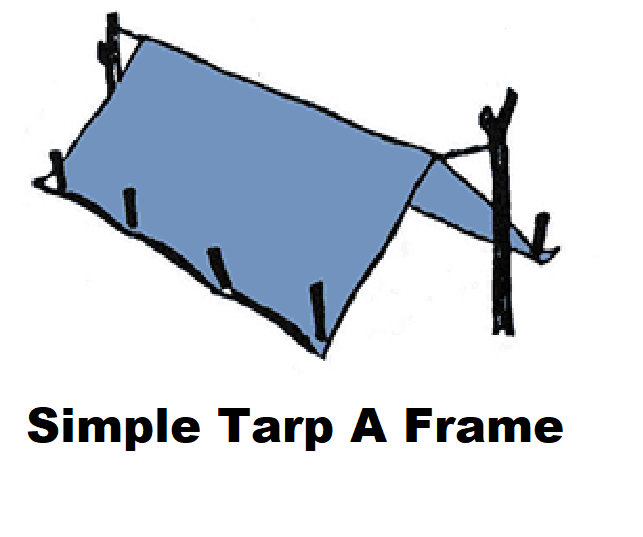
One of the easiest and simplest shelters you can build with minimal tools is the tarp shelter. All you need is a tarp, doesn't matter what size, some rope and sticks or trees to tie it to and you can make a quick shelter. It will keep you out of the wind or rain for a short duration in the outdoors.
Pros:
- Very adaptable to any location
- Quick to set up
- Offers protection from rain and wind
Cons:
- large tarps can heavy and bulky to carry
- Has very little insulating factor for colder weather
- used mainly during mild conditions
- short term use preferred
The most common tarp configurations include the suspended A-frame, lean-to, and overhead fly. These are easily adjusted depending on the environment, wind direction, and available resources.
2. Lean-To Shelter
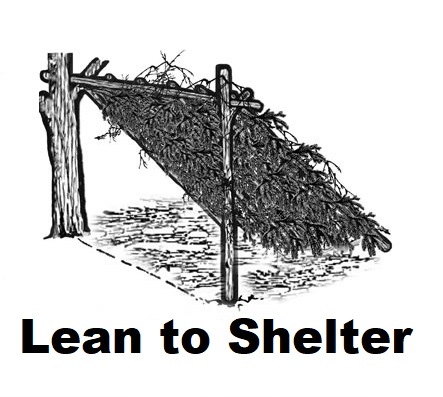
A lean-to shelter is a simple design that has been used since the dawn of time. It features a solid wall at the back which is covered to make it waterproof and to retain heat from a fire while it sloped design shields you from the elements.
Lets Build One:
- Make a ridge pole from a long, sturdy branch supported between two items like trees or rocks.
- Lean smaller branches from the ground up to the main beam at an angle to form a sloped wall.
- Cover this sloped wall with a tarp, bark, or spruce boughs for waterproofing and insulation.
Pros:
- Easy to construct with natural materials
- Works well with a fire in front for warmth
- Can be made any size for a perfect fit
Cons:
- Takes longer to build
- requires a bit of ingenuity and skill
- depends highly on the materials available
This type of shelter is best suited for forested areas with lots of natural resources and moderate temperatures.
Buy your survival cord here: https://amzn.to/4kDa6nh
3. Debris Hut
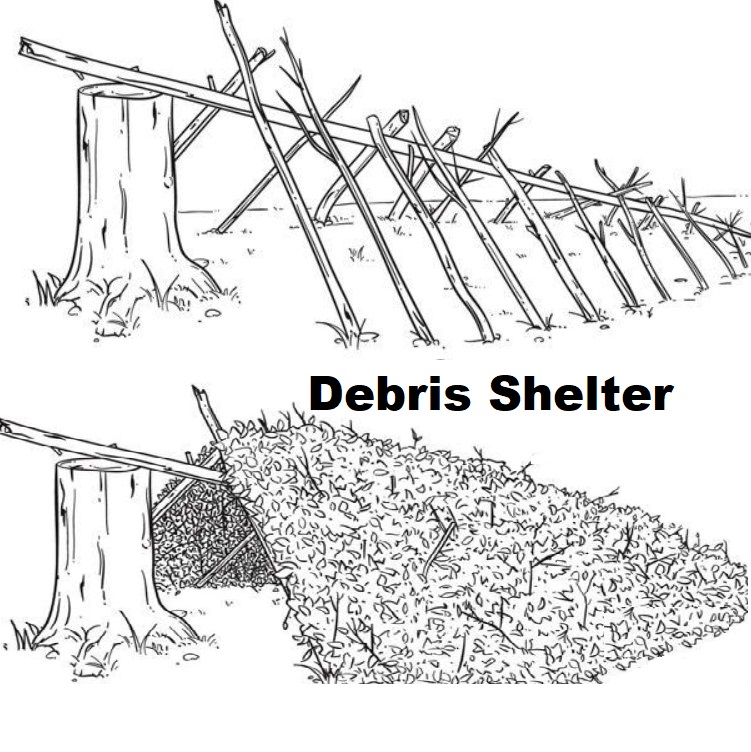
A debris hut's key design and feature is mainly for insulation and warmth. This makes it the preferred choice for cold-weather shelters. It’s compact and efficient so its easier to heat and its shape resembles that of a narrow triangular lean-to.
Lets build One:
- Place a long central ridgepole from the ground angled up to be supported by a tree or Y pole.
- place sticks and branches at an angle along both sides creating sloped walls.
- Pile leaves, grass, moss, branches and boughs several inches thick over the structure.
Pros:
- Excellent insulation
- Retains body heat
- No tools required
Cons:
- Requires lots of available natural resources
Best for: Cold environments, overnight stays, and situations where warmth is a priority.
4. Snow Cave known as a Quinzee
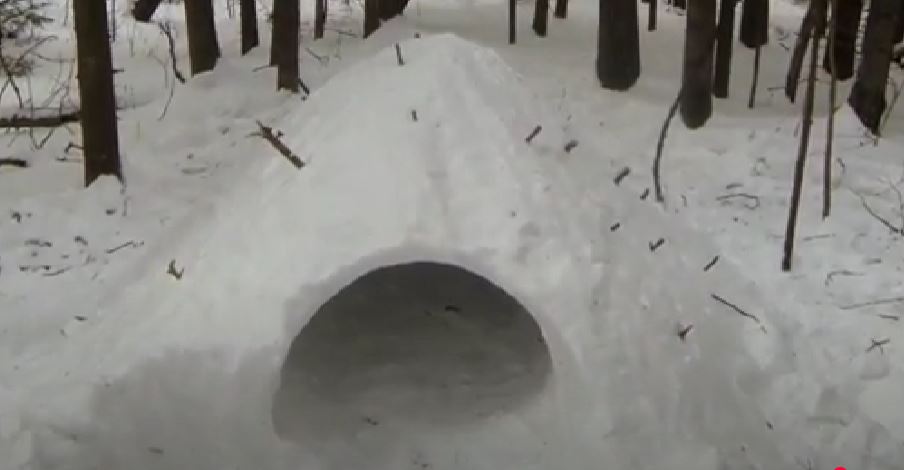
If the area you are in has snowy conditions then a snow cave which is known as a Quinzee can be a life-saving shelter. By piling snow up into a large pile and letting it Sinter, it can be then dug out to create a space that’s insulated from freezing temperatures and wind.
Watch my Youtube video here to see the step by step process of building a Quinzee
Lets Build One: https://www.youtube.com/watch?v=Z5aHvLUe9co
Pros:
- Excellent insulation
- Blocks wind and extreme cold
- Can be made with any makeshift shovel
Cons:
- Requires a good amount of snow for forming the mound
- Melt conditions may collapse the shelter
- Needs venting for condensation release
Best for: Northern snowy regions, especially in emergencies during winter activities like skiing, snowshoeing or dog sledding.
5. A-Frame Shelter
An A-frame is the largest of the survival shelters. It features taller walls and is a weather-resistant structure. It is primarily built using natural materials and quite often enhanced with a tarp roof for waterproofing.
Lets Build One:
- A Long ridgepole is supported between two Y-shaped branches.
- Lean more branches and sticks on both sides to form a triangle shape.
- Cover with foliage, leaves, or a tarp.
Pros:
- Sturdy and weather-resistant
- Can be insulated for warmth
- Good for medium-term use
Cons:
- Is a larger structure, may take 2 people to build
- requires more time to build properly
Best for: When you need to stay put for a longer period of time, say several days. Works well in areas or greater wind and rain as it offers more shelter than the rest.
6. Dugout Shelter (Pit Shelter)
The pit shelter offers reduced visibility as it is mainly below grade and is well insulation by utilizing the earth itself. You dig into the ground to create a protective space, then cover it with a roof made of logs and debris.
Pros:
- Excellent wind and temperature insulation
- Stealthy and low-profile
- Can be reinforced for long-term use
Cons:
- requires a lot of digging with tools
- uses a lot of energy to build
Best for: Long-term survival, stealth camping, or extreme weather where ground-level shelter is beneficial.
Buy your survival shovel here: https://amzn.to/3ZyEXJs
Key Items for Survival Shelters
- Location matters: Choose higher ground to avoid flooding, but avoid exposed ridges during storms.
- Insulation is key: Use natural materials like leaves, moss, or pine boughs to keep warm.
- Ventilation: Always leave space for airflow, especially when using a fire or building in snow.
- Safety first: Avoid dead trees (widow-makers), insect nests, and animal trails when selecting a site.
In Conclusion
Being able to build different types of survival shelters depending on your situation will increase your chances of enduring the outdoors. Whether you’re a weekend adventurer or a dedicated survivalist, mastering these shelter types ensures you’re prepared for whatever nature throws your way. Remember, the best shelter is the one that meets your immediate needs with the resources you have on hand—so learn, practice, and stay safe out there.