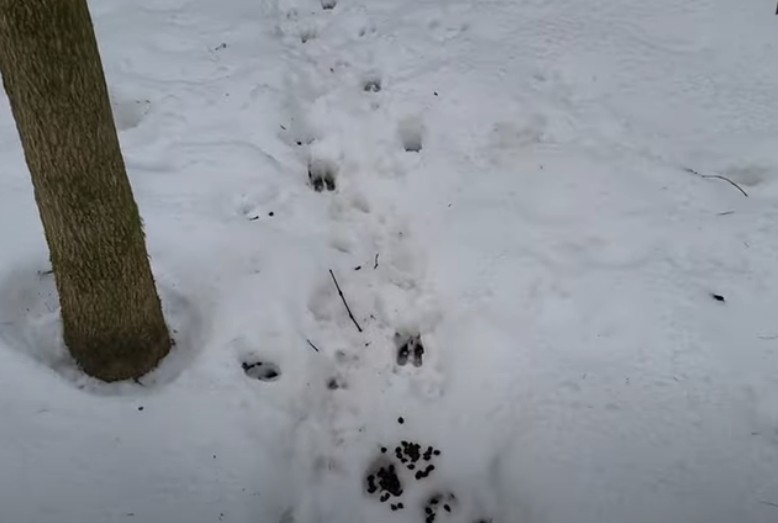
How to Do a Late-Season Archery Deer Drive with a Group
Late season can be one of the toughest times to fill a deer tag with a bow. The rut has wound down, the woods are quieter, and deer have learned every trick in the book. But when the temperatures drop and the snow starts to fly, one tactic that can put venison in the freezer is a group deer drive. While most hunters think of deer drives as a firearm tradition, with some adjustments they can be adapted for archery hunting. The key is strategy, safety, and understanding how deer behave late in the year.
Why Late-Season Drives Work
By December, deer tend to herd up and spend much of their time in secure bedding cover. They’ve been pressured for months, so they retreat to the thickest swamps, cedar groves, cattails, and brush areas they can find. Sitting in a tree stand all day can be a waiting game with low odds that will inevitably freeze you to your core. A slow, careful drive with a group of bowhunters can nudge deer out of those sanctuaries and into predictable escape routes where standers have a chance at close-range shots.
Safety First
Before diving into setup, the most important aspect of any deer drive is safety. With bows, the risk of an accidental shot is lower than with rifles, but it’s still critical to set clear roles. Each hunter should know whether they’re a Driver—the one walking through cover—or a Blocker, posted at an exit route. Nobody switches roles mid-drive. Blockers must be disciplined, only drawing when a deer is in range and presenting a clear, ethical shot. Drivers should carry radios or use hand signals to maintain communication. Knowing exactly where everyone is at all times is extremely important.
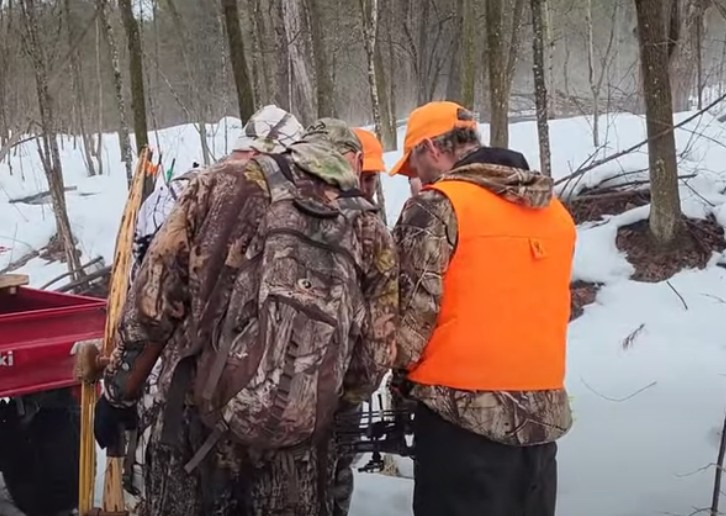
Group Setup
A successful drive starts with a well-scouted plan.
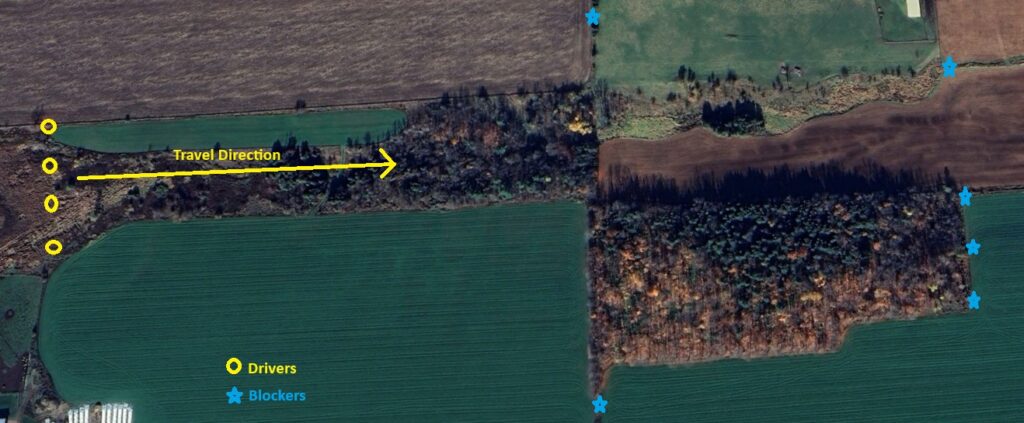
- Blockers should be placed where deer naturally funnel: creek crossings, saddles, fencelines, or the edge of thick cover leading into open food sources. The closer these spots force deer, the better—since bows are short-range tools, you’re looking for 20–30 yard shot opportunities, not long chases.
- Drivers move slowly through bedding areas. The goal isn’t to spook deer into a dead sprint but to pressure them just enough to slip out of cover. For this reason, archery drives are quieter than firearm drives. Instead of shouting or clapping, drivers simply move steadily, pausing occasionally to keep deer on edge and moving forward.
Spacing is important. Drivers should keep 30–50 yards between each other, forming a line that sweeps through cover at the same pace. Moving into the wind helps, since deer prefer to sneak out downwind and that’s where your Blockers should be waiting.
Drive Style for Bows
Traditional gun drives rely on deer bolting toward escape routes where hunters can take long, quick shots. That won’t work with archery gear. With bows, you want what’s often called a “silent push.” Drivers create just enough disturbance to make deer uneasy. Instead of exploding out of cover, deer often stand up, sneak along trails, or trot at a manageable pace. This gives blockers a real chance at drawing undetected and making a clean shot.
Keeping drives short is another key adjustment. A small woodlot, 200 to 300 yards across, is perfect for bow drives. The longer the push, the more likely deer will bust out at full speed and out of range.
Conditions and Timing
Late season drives are most effective when conditions concentrate deer. After snowstorms, deer pile into thick cover for shelter, making it easier to predict where they’ll bed. On bitter cold days, they often stage close to food sources. If you know where deer are feeding in the evening, you can plan a drive that bumps them from bedding cover toward those food plots or ag fields.
Extra Tips
- Rotate roles so everyone gets a turn as a Blocker and a driver.
- Don’t abandon stander positions too soon—deer often filter out minutes after drivers have passed.
- Scout ahead of time. Walk the edges to find trails, tracks, and natural funnels. Those are your ambush spots.
In Conclusion
A late-season archery deer drive isn’t about chaos and noise. It’s about teamwork, patience, and subtle pressure. By moving deer naturally instead of blowing them out of the county, you give your group close-range opportunities that fit bowhunting’s limitations. With a safe plan, good communication, and careful execution, deer drives can be a fun, social, and surprisingly effective way to put venison on the table when the days are short and the woods are quiet.