How a Homemade LEGO Lure Made Waves at our Annual Fishing Derby
Every year we have a homemade lure fishing derby. You expect to see an array of rods, reels, and shiny tackle boxes loaded with the latest lures—spinners that glisten like treasure, soft plastics that wiggle with lifelike precision, and crankbaits that cost more than your car. What you don’t expect to see dangling from a fishing line is a varying array of brightly colored LEGO brick.
Yet there we all were, ready at the edge of the lake, fishing boats ready to launch on derby morning, with our homemade LEGO lures tied to our lines.
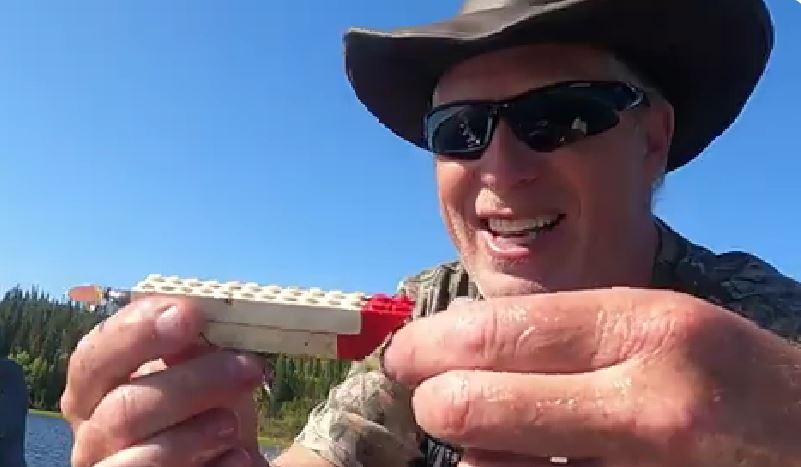
The idea first started as a joke. Get something from the dollar store and turn it into a fishing lure. From there we had our first derby. It was such a hit and great day on the lake that it was decided the winner of that derby gets to pick what the following years lure is made of. That’s when we get to this years derby and the lure of choice is made of LEGO. A little red 2x4 brick in my hand and an idea began to form.
The Build: Engineering a LEGO Lure
Like any true angler, I know half the fun of fishing comes from tinkering—tying knots, adjusting weights, and trying to outsmart the fish with clever design. So, I set out to build possibly the world’s first (to my knowledge) LEGO fishing lure.
The process was equal parts engineering and madness. I chose red and white 2x8 bricks for visibility, snapped onto a thin piece of wire to hold the hooks. For some hydrodynamics (in theory, anyway), I sloped the head and added propellers, attached split rings and treble hooks. I sealed the gaps with clear epoxy to make it waterproof and gave it a little extra weight with lead shot.
Within a couple hours, I was holding something that looked like a cross between a children’s toy and a science experiment gone wrong. Still, there was something satisfying about it. It wasn’t just a lure—it was a conversation starter, a test of creativity, and, let’s be honest, a bit of comedic relief for the derby.
The Derby: Where Brilliance Meets Glory
When we all arrived at the lake for the derby, we all knew this could go one of two ways, either really great or really wrong.
My top-secret prototype was ready for action.”
The laughter that followed was good-natured, but there was genuine curiosity too. Anglers, after all, are innovators by nature. We’ve all seen lures made from spoons, soda tabs, and even bits of aluminum foil. We have done it all ourselves. Why not LEGO?
Get your Lego blocks here - https://amzn.to/48aTuzM
The first few casts didn’t inspire confidence. The lure splashed down like a large red and white brick—which, to be fair, it was—and didn’t exactly have the seductive wiggle of a store bought crankbait. After a few adjustments to the retrieve speed and rod angle, I noticed something interesting: the flat sides of the LEGO caused it to flutter and flash in the water, catching light in a surprisingly enticing way.
And then it happened.
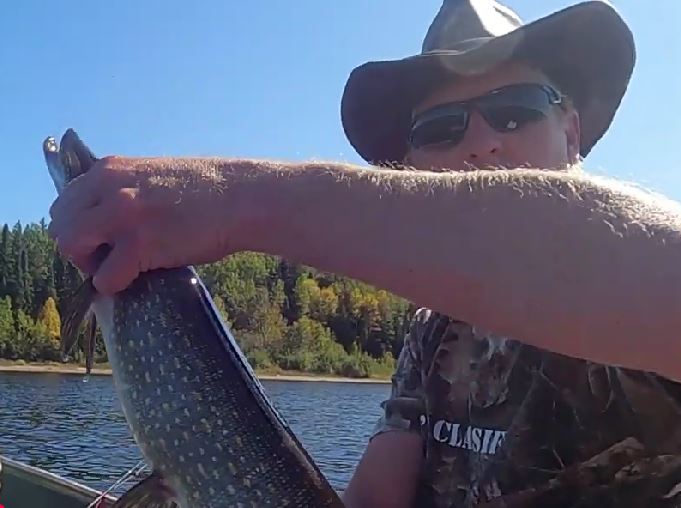
About twenty minutes in, I felt that telltale tug on the line. My rod bent, the reel sang, and my heart jumped. Whether it was luck, curiosity, or the fish’s own sense of humor, a decent-sized northern pike had taken the bait. I reeled it in and ended up loosing the fish right close to the boat. For the next few passes around the lake I had numerous hits but couldn't get any fish to stick. Persistence did pay off though and I eventually landed a few fish on my home made LEGO lure.
Hooked on Ingenuity
That single fish didn’t win me the derby, but it did win something better: an afternoon of laughter. Soon, others were laughing too. Everyone's laughter was heard clear across the lake from boat to boat. We only spent a few hours fishing but had an absolute blast.
What started as a silly experiment had turned into a reminder of what fishing is really about—creativity, patience, and the joy of the unexpected. The LEGO lure became a symbol of thinking outside the tackle box.
It wasn’t about tricking fish with the most high-tech gear. It was about connecting imagination to the water.
DIY Tips: Making Your Own LEGO Lure
If you’re tempted to try this yourself (and let’s be honest, you probably are), here are a few tips:
- Choose Floating Bricks: Standard LEGO bricks float, so you’ll need to add weight or seal them to make them sink properly.
- Drill with Care: Use a fine drill bit to insert screw eyes without cracking the plastic.
- Seal It: A coat of clear epoxy keeps water out and adds shine.
- Test It: Experiment with different shapes—flat tiles and wedge pieces create interesting movement in the water.
- Most Important—Have Fun: Don’t take it too seriously. It’s about the experience, not just the catch.
In Conclusion:
That day at the derby, I didn’t take home a trophy, but I did take home something better: a story that got retold at every fishing trip afterward and a great video I can share with you. The LEGO lure now sits proudly on the wall of moose camp, treble hooks removed, as a reminder that the best part of fishing isn’t always the fish.
Sometimes, it’s the laughter, the looks of disbelief, and the quiet thrill of catching something new—with nothing more than a toy, a line, and a little imagination.